The Rising Cost of Powering the AI Revolution: Why Big Tech’s Bet on Natural Gas is Hitting a Financial Wall

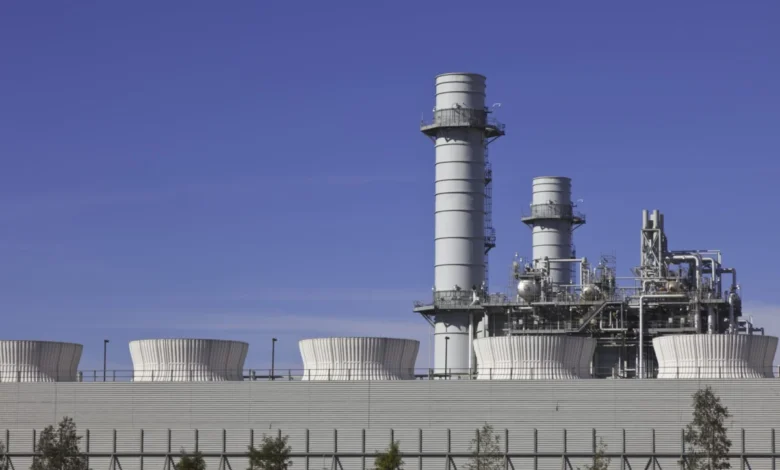
The meteoric rise of generative artificial intelligence has triggered an insatiable hunger for electricity, forcing tech giants like Microsoft and Meta to pivot from their previous reliance on clean energy toward a more traditional, carbon-heavy solution: natural gas. However, this strategic shift is encountering significant headwinds. A landmark report from BloombergNEF reveals that the cost of constructing a new combined-cycle gas turbine (CCGT) power plant has surged by 66% over the last two years. As data center operators scramble to secure energy, they are finding that the infrastructure required to fuel the AI boom is becoming increasingly expensive, slow to build, and a lightning rod for public controversy.
A Rapidly Escalating Capital Crisis
In 2023, the cost to develop a CCGT facility sat at approximately $1,500 per kilowatt of generating capacity. By the end of last year, that figure had climbed to $2,157 per kilowatt. This spike is not merely a result of inflationary pressure; it represents a fundamental misalignment between the rapid, short-term needs of the tech sector and the notoriously slow, capital-intensive nature of utility-scale energy infrastructure.
The logistical delays are equally daunting. The construction timeline for these facilities has lengthened by 23%, a delay that threatens to disrupt the deployment schedules of massive AI training clusters. These power plants are essentially the engines of the modern digital economy, and when the construction of an engine slows down, the entire vehicle stalls.
The Anatomy of the Supply Chain Bottleneck
At the heart of this crisis is a severe shortage of gas turbines. These complex pieces of machinery account for nearly 30% of the total cost of a power plant. Market data indicates that by the end of 2026, the price of these turbines will be 195% higher than their 2019 baseline.
The manufacturing process for high-performance turbines is highly specialized, requiring precision engineering that does not easily lend itself to the "move fast and break things" philosophy favored by Silicon Valley. Manufacturers are currently struggling to ramp up production, leading to order backlogs that stretch well into the early 2030s. This creates a "gold rush" dynamic: as tech companies compete to secure limited hardware, they drive up costs for everyone else, including municipal utilities and independent power producers.
The Data Center Energy Forecast
The surge in demand is not a temporary blip but a long-term structural shift. Current data center electricity demand is estimated at roughly 40 gigawatts. Industry analysts project that this number will climb to 106 gigawatts by 2035—a 270% increase.
This growth is driven by a change in scale. Historically, data centers were decentralized, smaller facilities. Today, the industry is trending toward "hyperscale" campuses. Currently, only 10% of global data centers exceed 50 megawatts; within a decade, the average facility size is expected to surpass 100 megawatts. This density puts an unprecedented load on regional electrical grids, necessitating either massive grid upgrades or the construction of private power plants directly on-site or adjacent to the data centers.

Political and Public Backlash
The decision by major tech firms to invest in natural gas has created friction with both regulators and the public. The current administration has encouraged data center operators to "bring their own power" to avoid straining existing public grids. However, in practice, the integration of private power generation into the broader energy market remains complex.
When utilities are forced to accommodate these massive new loads, the costs for infrastructure upgrades—such as new transmission lines and substations—are frequently passed down to residential and commercial ratepayers. This has fueled a growing grassroots movement against the expansion of data centers. Citizens in regions like Northern Virginia and parts of the Pacific Northwest have begun to protest the environmental and economic impact of data centers, arguing that their communities are bearing the cost of private corporations’ energy consumption.
A Chronology of the Shift
- 2020–2022: Tech companies focus heavily on Power Purchase Agreements (PPAs) for renewable energy, aiming to reach net-zero carbon goals.
- 2023: The rapid deployment of LLMs and generative AI models creates a sudden, unexpected spike in power demand that exceeds the capacity of intermittent renewables.
- 2024: Tech firms begin pivoting toward "always-on" power sources, identifying natural gas as the most reliable bridge to meet the 24/7 requirements of AI server farms.
- 2025: Construction costs for CCGT plants begin their sharp upward trajectory as turbine supply chains fail to keep pace with demand.
- 2026: Public opposition to data center infrastructure grows as grid instability concerns mount and cost-sharing debates take center stage in state utility commission hearings.
Alternative Strategies: The Google Approach
While Microsoft and Meta are heavily tethered to natural gas, other players are exploring different strategies. Google, for instance, has recently begun to emphasize a diversified energy portfolio. Their approach focuses on pairing solar and wind power with long-duration energy storage systems, such as iron-air battery technology developed by firms like Form Energy.
These batteries are capable of discharging electricity over a period of up to 100 hours, theoretically solving the "intermittency problem" of renewables without relying on fossil fuels. Unlike gas turbines, which are becoming more expensive, the cost of solar photovoltaic systems and advanced battery storage has continued to trend downward. This suggests that the current reliance on natural gas might be a short-term tactical error for some companies, while others are positioning themselves for a future where renewables are the primary, rather than secondary, power source.
Implications for the Energy Transition
The reliance on natural gas presents a paradox for tech companies that have staked their reputations on ambitious environmental, social, and governance (ESG) targets. By building gas-fired plants, these corporations are effectively committing to decades of fossil fuel reliance. This move complicates the global energy transition, as these plants will remain on the grid for years, potentially delaying the retirement of older, less efficient fossil fuel assets.
Furthermore, the economic instability of the current construction market means that tech companies are facing significant financial risk. If the AI bubble were to cool or if electricity prices were to fluctuate wildly, the capital sunk into these expensive, long-term infrastructure projects could result in substantial balance-sheet impairments.
Conclusion
The "embrace" of natural gas by the tech sector has proven to be as costly as it is controversial. With construction costs soaring by 66% and equipment lead times extending into the next decade, the industry is reaching a critical inflection point. As data center demand continues to push toward the 100-gigawatt threshold, the sector must decide whether it will continue to double down on traditional fossil fuels—at the risk of public ire and long-term stranded assets—or whether it will accelerate the development of next-generation storage and renewable integration. For now, the cost of the AI revolution is being measured not just in compute cycles, but in the hardening price of the power grid itself.
Related posts: